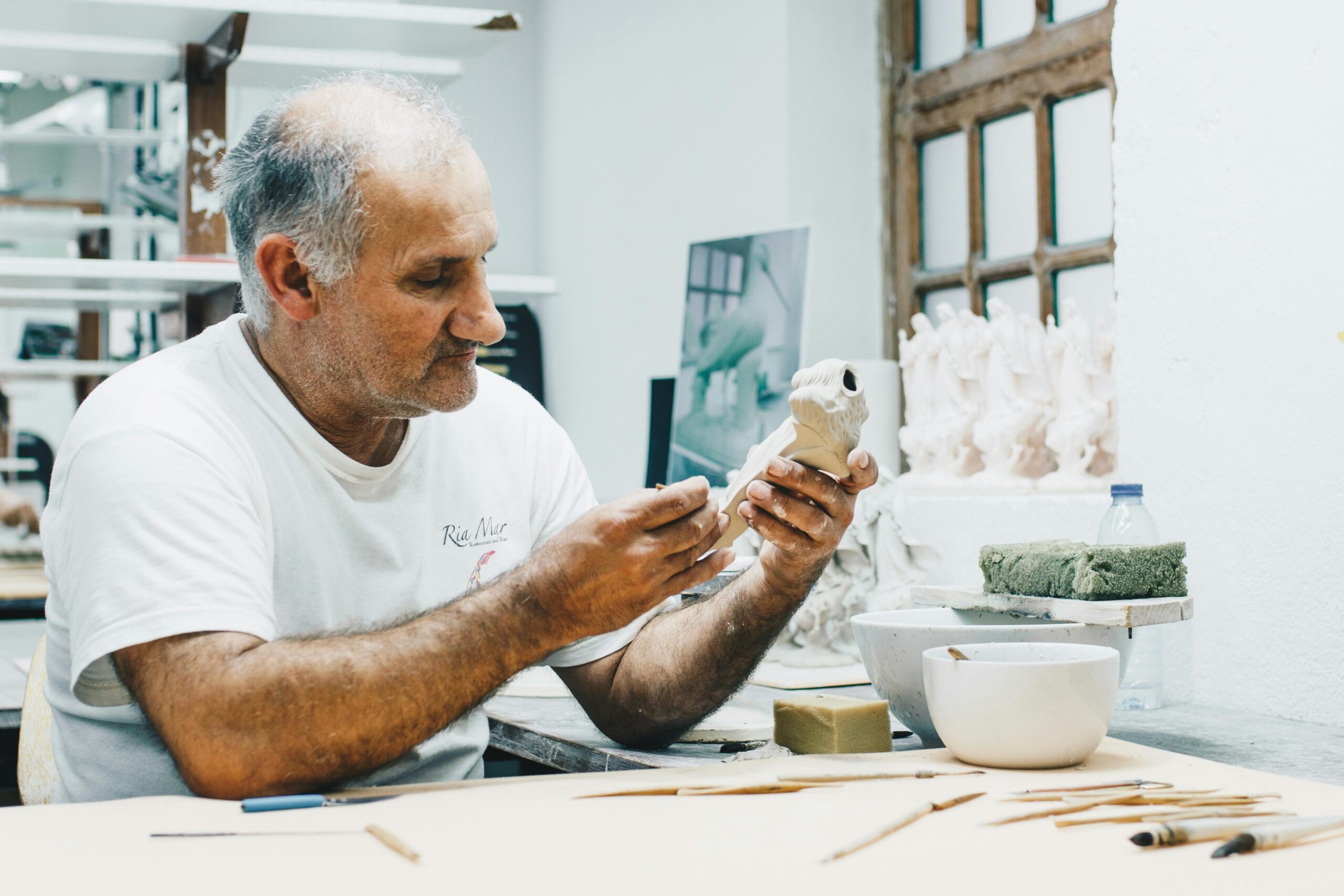
The story of human evolution is inseparable from our relationship with tools, a bond that fundamentally altered our anatomy, cognition, and destiny as a species.

🔨 The Dawn of Technological Humanity
When our ancient ancestors first grasped a stone and deliberately shaped it into a cutting edge approximately 3.3 million years ago, they initiated a feedback loop that would forever change the trajectory of human development. This wasn’t merely about survival or convenience; it represented the beginning of a profound co-evolutionary relationship between tool use and human biology. The simple act of manipulating objects with intention set in motion anatomical, neurological, and social transformations that distinguish us from all other species on Earth.
Archaeological evidence from sites across Africa reveals that early hominins like Australopithecus and later Homo habilis were already experimenting with stone tools long before the emergence of modern humans. These primitive implements—simple flakes and choppers—required cognitive abilities that would gradually reshape the brain itself. The neural pathways necessary for planning, fine motor control, and abstract thinking grew stronger with each generation that relied on these technological innovations.
Anatomical Revolution Through Manual Dexterity
The human hand is an evolutionary masterpiece, and its current form owes much to our ancestral tool-making practices. Our opposable thumbs, the precise arrangement of muscles and tendons, and the remarkable sensitivity of our fingertips all evolved in concert with our increasing dependence on manipulating objects. Unlike our primate cousins, human hands sacrifice some climbing efficiency for unprecedented precision in grip and manipulation.
Research published in evolutionary biology journals demonstrates that the morphology of the human hand shows specific adaptations for tool use that emerged over millions of years. The shortened fingers relative to palm size, the robust thumb musculature, and the unique wrist structure all facilitate the power and precision grips essential for crafting and wielding tools. This wasn’t a sudden change but a gradual refinement driven by natural selection favoring individuals who could more effectively create and use implements.
Skeletal Adaptations Beyond the Hand
Tool use didn’t just modify our hands; it influenced our entire skeletal structure. The transition to habitual bipedalism—walking upright on two legs—is intimately connected with freeing the hands for carrying and using tools. This postural shift required fundamental changes to the pelvis, spine, feet, and even the position of the foramen magnum (the hole in the skull where the spine connects).
The energy efficiency gained from bipedal locomotion allowed early humans to travel greater distances while carrying tools, food, and eventually, crafted goods for trade. This mobility advantage, combined with tool use, enabled our ancestors to exploit diverse environments and food sources unavailable to other species. The archaeological record shows a clear correlation between sophisticated tool assemblages and the geographic expansion of human populations.
🧠 Cognitive Expansion and Neurological Transformation
Perhaps the most dramatic impact of tool use lies in the expansion and reorganization of the human brain. Over the past two million years, hominin brain size has roughly tripled, with much of this growth concentrated in areas associated with planning, problem-solving, language, and fine motor control. This wasn’t coincidental—it was driven largely by the cognitive demands of increasingly complex tool manufacture and use.
Neuroscientific research using modern imaging techniques reveals that tool use activates multiple brain regions simultaneously, including areas responsible for spatial reasoning, motor planning, memory, and even language. The mental processes required to envision a finished tool, select appropriate materials, and execute the precise sequence of actions to create it demand sophisticated cognitive abilities. Each generation that engaged in these practices essentially exercised and expanded their neural circuitry.
The Language-Tool Connection
Fascinating evidence suggests that the brain regions controlling language and fine motor skills evolved together, likely because both require similar sequential processing abilities. Creating a complex tool involves understanding hierarchical steps and cause-effect relationships—cognitive structures that also underpin grammar and syntax. Some researchers propose that the gestural communication necessary for teaching tool-making techniques may have provided the evolutionary foundation for spoken language itself.
The transmission of tool-making knowledge across generations required not just demonstration but explanation, planning discussions, and error correction. These social learning contexts created selective pressure for enhanced communication abilities, driving the evolution of both language capacity and the anatomical structures supporting speech, including changes to the larynx, tongue, and vocal tract.
Social Complexity and Cultural Evolution 🤝
Tools transformed not just individual humans but the entire fabric of human society. The knowledge required to create effective tools couldn’t be entirely discovered through individual trial and error within a single lifetime. This necessitated social learning, cooperation, and the development of teaching behaviors—foundations of human culture.
Anthropological studies of traditional societies demonstrate that tool-making is invariably a social activity embedded in cultural contexts. Skills are passed from experienced practitioners to novices through apprenticeship models that require patience, observation, and verbal instruction. This intergenerational knowledge transfer created what we now recognize as cumulative culture—the ability to build upon previous innovations rather than starting from scratch each generation.
Division of Labor and Specialization
As tool technologies became more sophisticated, they enabled and required increasing specialization within communities. Not everyone needed to master every skill; instead, individuals could develop expertise in particular crafts while trading their products for other necessities. This economic specialization, made possible by tools, fostered interdependence and larger, more complex social structures.
The archaeological record shows clear evidence of specialized tool production sites where particular resources were processed by apparent experts. Stone tool workshops, ochre processing locations, and later, pottery kilns and metallurgical facilities all point to the emergence of craft specialization that fundamentally altered human social organization.
⚙️ Tools as Extensions of Human Capability
Throughout history, each major innovation in tool technology has effectively extended human capabilities beyond our biological limitations. Fire allowed us to cook food, pre-digesting it externally and making nutrients more bioavailable—a development that likely contributed to further brain growth by reducing digestive system energy demands. Clothing extended our thermal regulation, enabling habitation of previously uninhabitable climates.
Agricultural tools like plows and irrigation systems transformed humans from nomadic foragers to settled agriculturalists, fundamentally altering our relationship with the landscape and enabling population growth. This sedentary lifestyle brought new challenges—increased disease transmission, social hierarchy, and eventual urbanization—but also created the conditions for technological acceleration.
The Mechanical Revolution
The development of mechanical tools—from simple machines like levers and pulleys to complex systems like water mills and clocks—represented a quantum leap in human capability. These devices allowed individual humans to accomplish tasks requiring strength or precision far beyond biological limits. The cognitive demands of understanding mechanical advantage, gear ratios, and complex causation further refined human technological thinking.
Medieval and Renaissance innovations in tool-making, including precision measuring instruments, metallurgical advances, and optical devices like telescopes and microscopes, opened entirely new realms of investigation. These tools didn’t just extend our physical capabilities; they extended our perceptual range, revealing worlds both cosmically vast and microscopically small that were previously inaccessible to human senses.
🏭 Industrial and Digital Transformations
The Industrial Revolution marked another fundamental shift in the human-tool relationship. Powered machinery allowed unprecedented production scales, transforming tools from individual implements to complex systems. Steam engines, mechanical looms, and eventually assembly lines created new forms of labor, new economic structures, and new social challenges including urbanization and labor rights movements.
Interestingly, this period also saw the first instances where tools began shaping human physical development in negative ways. Factory work led to repetitive strain injuries, poor posture from monotonous tasks, and health problems from industrial pollution. This darker side of technological progress revealed that the human-tool relationship could be maladaptive when tools were designed without consideration for human ergonomics and wellbeing.
The Digital Age and Cognitive Tools
Contemporary digital technologies represent perhaps the most profound shift since the original stone tools. Computers, smartphones, and internet connectivity function as cognitive prosthetics, extending our memory, calculation, communication, and information processing capabilities to degrees unimaginable even decades ago. These tools don’t just augment our physical abilities—they fundamentally alter how we think, remember, and relate to information.
Research in cognitive psychology demonstrates that digital tools are literally reshaping modern brains through neuroplasticity. The constant multitasking, rapid information switching, and visual processing demands of digital interfaces create different neural patterns than those developed through traditional literacy or face-to-face interaction. Whether these changes represent progress or concern remains hotly debated among neuroscientists and educators.
Evolutionary Implications for Modern Humans 🔬
The pace of technological change now vastly outstrips biological evolution. While our ancestors had thousands of generations to adapt anatomically to new tool technologies, modern humans encounter revolutionary technological shifts within single lifetimes. This mismatch between biological adaptation time and technological change rate creates unique challenges for contemporary society.
Our bodies still carry evolutionary adaptations suited for Paleolithic environments—designed for high physical activity, varied natural diets, and small social groups. Yet we now inhabit sedentary, digitally-mediated, processed-food-rich environments that our physiology wasn’t optimized for. Health challenges like obesity, myopia, repetitive strain injuries, and attention disorders may partly reflect this evolutionary-technological mismatch.
Future Co-Evolution Possibilities
Looking forward, emerging technologies like genetic engineering, neural interfaces, and artificial intelligence raise profound questions about the future of human-tool co-evolution. Will we consciously direct our own biological modifications to better interface with our technologies? Brain-computer interfaces already allow direct neural control of prosthetic limbs and computer cursors, suggesting a future where the boundary between human and tool becomes increasingly blurred.
Some researchers propose that we’re entering an era of “techno-evolution” where cultural and technological changes drive adaptation faster than natural selection alone. The ability to rapidly modify our environment, augment our cognition with AI, and potentially edit our own genomes represents an unprecedented level of control over our evolutionary trajectory—with corresponding ethical responsibilities.
🌍 Environmental and Societal Transformations
The tools humans have created haven’t just changed us; they’ve transformed the entire planet. Agriculture reshaped landscapes, cities replaced ecosystems, and industrial technologies altered atmospheric chemistry itself. The Anthropocene—a proposed geological epoch defined by human environmental impact—is fundamentally a story of tool use consequences at planetary scale.
Climate change, biodiversity loss, and resource depletion represent the unintended consequences of powerful technologies deployed without full understanding of systemic effects. Yet simultaneously, technological innovation offers potential solutions through renewable energy, sustainable materials, and restoration techniques. This paradox defines the modern human condition: we are tool-makers whose creations now determine the habitability of our own planet.

Wisdom from Our Technological Journey
Reflecting on millions of years of human-tool co-evolution reveals several profound lessons. First, technology is never neutral—every tool changes not just what we do but who we are. The implements we create reshape our bodies, rewire our brains, and restructure our societies in ways both intended and unexpected. Understanding this recursive relationship is essential for making wise technological choices.
Second, our success as a species stems not from individual capabilities but from collective knowledge accumulation. The tools that define human civilization represent countless innovations built upon millennia of shared learning. This cultural inheritance is our greatest asset and our most significant responsibility to future generations.
Finally, the accelerating pace of technological change demands increased wisdom in how we develop and deploy new tools. Unlike our ancestors, we now possess the power to create technologies that could either solve existential challenges or trigger catastrophic consequences. Navigation of this critical period requires understanding lessons from our deep evolutionary past while thoughtfully shaping our technological future.
The story of human evolution through tool use reminds us that we are fundamentally creative, adaptive beings whose identity is inseparable from the technologies we create. As we stand at the threshold of potentially transformative innovations in biotechnology, artificial intelligence, and planetary engineering, understanding this ancient relationship between maker and made has never been more crucial. Our hands that once shaped crude stone now manipulate genes and algorithms—but the essential dynamic remains: we create tools, and in turn, they create us.